
- Installer For Mac Os X
- Universal Usb Installer Windows 10 Download
- Mac Os X Installer
- Universal Installer For Mac Catalina
- Microsoft Universal Usb Installer
- Universal Installer For Mac Windows 7
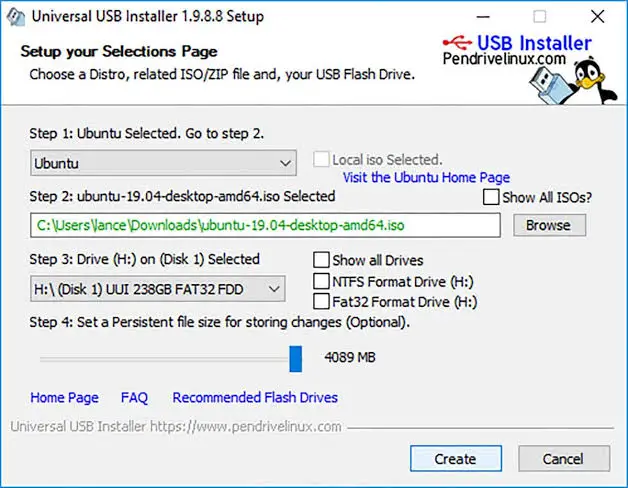
Download Universal USB Installer - Simplistic piece of software that adopts a step-by-step approach for helping you run a live Linux distribution from a portable USB flash drive. Description Universal USB Installer (UUI) is a Live Linux USB Creation tool, which lets you choose from a selection of Linux Distributions to add to a USB Flash Drive. Universal USB Installer is easy to use; simply choose a Live Linux Distribution, select the ISO file, and your Flash Drive and then click Install.
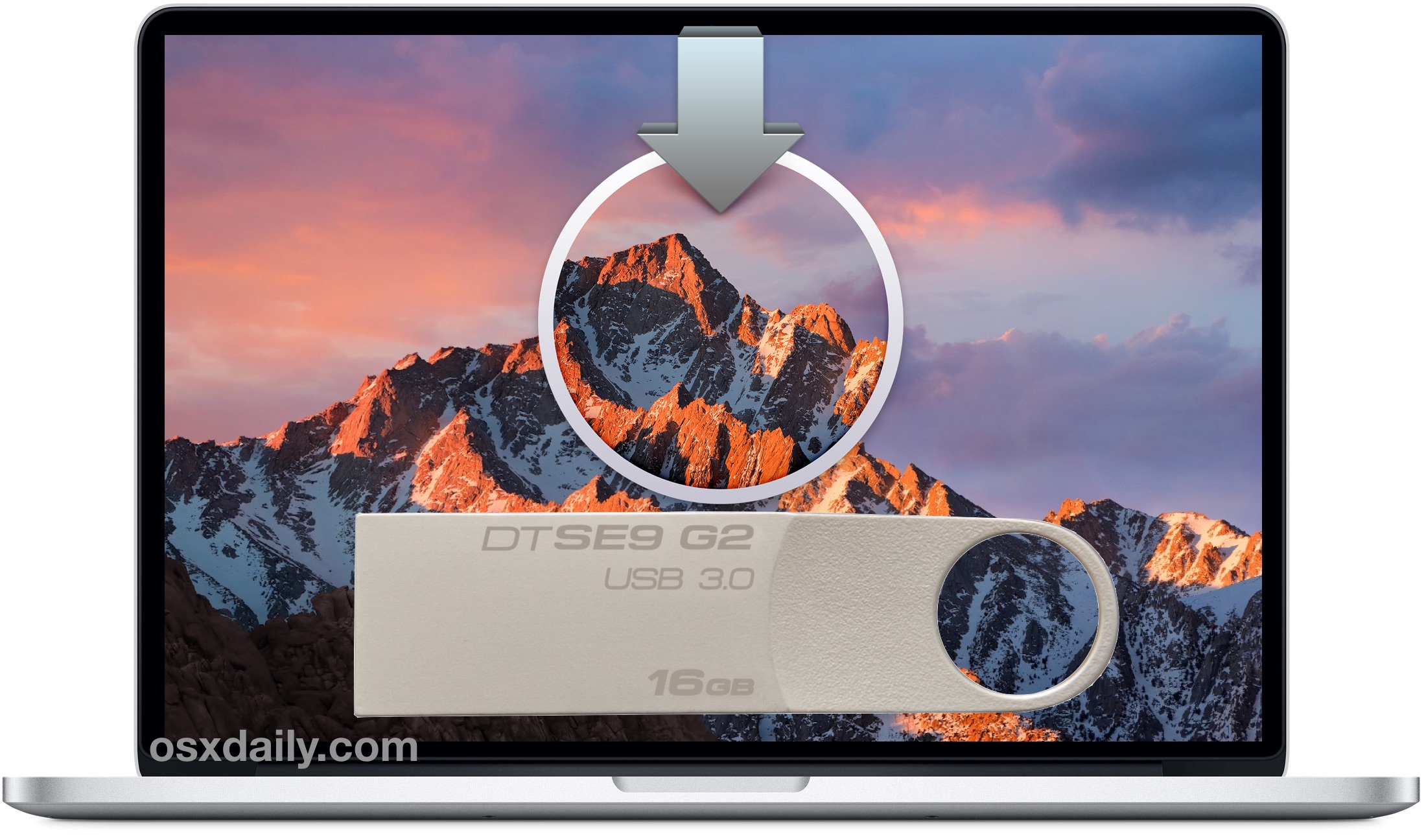
These advanced steps are primarily for system administrators and others who are familiar with the command line. You don't need a bootable installer to upgrade macOS or reinstall macOS, but it can be useful when you want to install on multiple computers without downloading the installer each time.
Rufus (Windows) When it comes to creating a bootable USB drive in Windows, Rufus is undeniably.
Download macOS
Find the appropriate download link in the upgrade instructions for each macOS version:
macOS Catalina, macOS Mojave, ormacOS High Sierra
Installers for each of these macOS versions download directly to your Applications folder as an app named Install macOS Catalina, Install macOS Mojave, or Install macOS High Sierra. If the installer opens after downloading, quit it without continuing installation. Important: To get the correct installer, download from a Mac that is using macOS Sierra 10.12.5 or later, or El Capitan 10.11.6. Enterprise administrators, please download from Apple, not a locally hosted software-update server.
Installer For Mac Os X
OS X El Capitan
El Capitan downloads as a disk image. On a Mac that is compatible with El Capitan, open the disk image and run the installer within, named InstallMacOSX.pkg. It installs an app named Install OS X El Capitan into your Applications folder. You will create the bootable installer from this app, not from the disk image or .pkg installer.
Use the 'createinstallmedia' command in Terminal
- Connect the USB flash drive or other volume that you're using for the bootable installer. Make sure that it has at least 12GB of available storage and is formatted as Mac OS Extended.
- Open Terminal, which is in the Utilities folder of your Applications folder.
- Type or paste one of the following commands in Terminal. These assume that the installer is still in your Applications folder, and MyVolume is the name of the USB flash drive or other volume you're using. If it has a different name, replace
MyVolumein these commands with the name of your volume.
Catalina:*
Mojave:*
High Sierra:*
El Capitan: - Press Return after typing the command.
- When prompted, type your administrator password and press Return again. Terminal doesn't show any characters as you type your password.
- When prompted, type
Yto confirm that you want to erase the volume, then press Return. Terminal shows the progress as the bootable installer is created. - When Terminal says that it's done, the volume will have the same name as the installer you downloaded, such as Install macOS Catalina. You can now quit Terminal and eject the volume.
* If your Mac is using macOS Sierra or earlier, include the --applicationpath argument, similar to the way this argument is used in the command for El Capitan.
Use the bootable installer
After creating the bootable installer, follow these steps to use it:
- Plug the bootable installer into a compatible Mac.
- Use Startup Manager or Startup Disk preferences to select the bootable installer as the startup disk, then start up from it. Your Mac will start up to macOS Recovery.
Learn about selecting a startup disk, including what to do if your Mac doesn't start up from it. - Choose your language, if prompted.
- A bootable installer doesn't download macOS from the Internet, but it does require the Internet to get information specific to your Mac model, such as firmware updates. If you need to connect to a Wi-Fi network, use the Wi-Fi menu in the menu bar.
- Select Install macOS (or Install OS X) from the Utilities window, then click Continue and follow the onscreen instructions.
Learn more

For more information about the createinstallmedia command and the arguments that you can use with it, make sure that the macOS installer is in your Applications folder, then enter this path in Terminal:
Catalina:
Mojave:
High Sierra:
El Capitan:
Universal USB Installer aka UUI is a Live Linux Bootable USB Creator that allows you to choose from a selection of Linux Distributions to put on your USB Flash Drive. The Universal USB Installer is easy to use. Simply choose a Live Linux Distribution, the ISO file, your Flash Drive and, Click Install. Upon completion, you should have a ready to run bootable USB Flash Drive with your select operating system installed. Other features include; Persistence (if available) – Ubuntu, Xubuntu, and Lubuntu Casper Persistence feature works with FAT32 or NTFS formatted drives. Larger than 4GB casper-rw is possible only when the USB drive is formatted with the NTFS filesystem.
NOTE: If you are looking to add multiple Linux Distributions, System Diagnostic Tools, Antivirus Utilities, and Windows Installers to your bootable USB, use YUMI – Multiboot USB Software, instead.
Universal USB Installer (UUI) Screenshots
Universal-USB-Installer-1.9.9.5.exe – October 14, 2020 – Changes
Removed Try via DD option. Moved Antergos and Mageia entries to use Grub to boot.
IMPORTANT: The Windows to Go option requires the USB be formatted NTFS with 20GB free disk space to hold the virtual disk. See FAQ for more info.
MD5: 3B38F7323FB48FB33A38E8E13E5A194D
IMPORTANT NOTE: Your USB drive must be Fat32/NTFS formatted, otherwise Syslinux will fail and your drive will NOT Boot.
Bootable USB Flash Drive Creation Requirements:
- Universal-USB-Installer-1.9.9.5.exe
- Windows Vista/7/8/10 or WINE to create the USB (Win 98/XP/2K WILL NOT Work!)
- *Fat32 or NTFS Formatted Flash Drive. MBR partition only GPT will not work!
- PC with a BIOS that can boot from USB
- Your Favorite Linux ISO
Feel free to inform me of unlisted Live Linux distributions or version revisions, and I will do my best to update Universal USB Installer (UUI) to support them.
Universal USB Installer Recent Changelog:
10/14/20 – Version 1.9.9.5: Removed Try via DD option. Moved Antergos and Mageia entries to use Grub for boot.
10/12/20 – Version 1.9.9.4: Updated to support Puppy Linux Fossapup64. Fixed Try Unlisted ISO (Grub) option. Updated to support newer CentOS installers. You must use an NTFS format on your USB when using the DVD ISO, because it is larger than 4GB.
08/04/20 – Version 1.9.9.3: Fixed broken links for Antergos, EasyPeasy, Xpud, and CubLinux.
07/28/20 – Version 1.9.9.2: Updated to support LinuxFX (aka: Windows FX or WinFX).
07/17/20 – Version 1.9.9.1: Support Ubuntu's 'writable' casper persistence file name.
12/04/19 – Version 1.9.9.0: Updated to support Clear Linux and Pop OS.
09/17/19 – Version 1.9.8.9: Updated to support Skywave Linux, and newer Knoppix. Corrected Ubuntu based persistent conditional statements.
06/01/19 – Version 1.9.8.8: Updated to support newer Archbang, ArchLinux, Manjaro, Dr.Web, and AntiX. Add support for KaOS, Pop OS, Bionic Pup, Emmabuntus, and MX Linux.
02/19/19 – Version 1.9.8.7: Updated to support initrd boot option for newer Ubuntu based distributions when USB drive is formatted NTFS. Added persistence option to Kodachi entry.
UUI can create a Bootable USB containing any of the following:
— Ubuntu 32/64 Bit —
- Ubuntu Desktop
- Xubuntu Desktop
- Kubuntu Desktop
- Lubuntu Desktop
- Edubuntu Desktop
- Ubuntu Studio
- *Ubuntu Server Installer
- **Ubuntu Alternate
- Mythbuntu Desktop
- Blackbuntu
— Linux Mint 32/64 Bit —
- Linux Mint
— Debian Live/Netinst 32/64 Bit —
- Debian Netinst
- *Debian Live
— Backtrack/Kali Versions —
- Kali Linux
- Backtrack
— Fedora 32/64 Bit —
- Fedora Desktop
— OpenSUSE 32/64 Bit —
- OpenSUSE 32bit
- *OpenSUSE 64bit
— Puppy Linux Based —
- Fatdog64
- Lighthouse Puppy
- Lucid Puppy
- Precise Puppy
- Puppy Arcade
- Puppy 4.3.1
- Racy Puppy
- Slacko Puppy
- Wary Puppy
— Linux Distros for Kids —
- DouDouLinux
- Qimo 4 Kids 2.0
- Sugar on a Stick
Universal Usb Installer Windows 10 Download
— Other Distros Alphabetical —
- AOMEI (Disk Cloning and Backup Tool)
- Acronis Rescue CD
- Android
- AntiX
- Antergos
- ArchBang
- ArchLinux
- ArtistX
- Aurora
- BackBox
- Baltix Linux
- BCCD
- BlehOS
- Bodhi
- Boot Repair Disk
- Carmedia
- CentOS
- Chakra
- Clonezilla
- Crunchbang
- DBAN 2.2.X
- Deft Linux
- Deepin Linux
- DRBL
- DSL 4.4.10
- Dreamlinux
- Dynebolic
- EASUS Disk Copy
- EasyPeasy
- Elementary OS
- Elementary Unleashed
- Feather Linux
- Finnix
- Fuduntu
- Fusion Linux
- Gamedrift
- Gentoo
- GEEXBOX
- gNewSense
- GRML
- gOS gadgets
- GParted
- Jolicloud
- Kiwi
- KNOPPIX
- Kororaa
- KXStudio
- Leeenux
- Liberte
- LinHES
- Linux XP Like
- LPS
- Macbuntu
- Mandriva One 2011
- Matriux
- MCNLive Toronto
- Meego
- MicroCore
- Netrunner
- Ophcrack
- OSGeo Live
- Pardus
- PartedMagic
- PCLinuxOS
- Pear OS
- Peppermint
- PING
- Pinguy OS
- Plasma active
- PLoP Linux
- Porteus
- Redo Backup
- Rescatux
- RIP Linux
- Runt Linux
- Sabayon Linux
- SalineOS
- Satux
- Simply MEPIS
- SLAX
- SliTaZ
- Sn0wL1nuX
- SolusOS
- System Rescue CD
- Tails
- Terralinux
- TinyCore
- Trisquel
- Uberstudent
- Ultimate Boot CD
- Ultimate Edition
- WifiWay
- WifiSlax
- xPUD
- XBMC
- XBMCbuntu
- StartOS
- wattOS R5
- Zenwalk Live
- Zorin OS
— Live Antivirus Rescue CDs —
- AOSS (Malware Scanner)
- AVG Rescue CD
- Avira Antivir Rescue Disk
- Bitdefender Rescue CD
- Comodo Rescue Disk
- DrWeb LiveCD
- F-Secure Rescue CD
- G DATA Antivirus
- Kaspersky Rescue Disk
- Panda Safe CD
- Trinity Rescue Kit
— Other Software —
Mac Os X Installer
- Falcon 4 Boot CD
- Hiren's Boot CD
- Kon-Boot
— Windows to Go + Windows Installers —
- Windows to Go (on VHD)
- *Windows Vista Installer
- **Windows 7 Installer
- ***Windows 8 Installer
— Try to use an Unsupported ISO —
- Try Unlisted Linux ISO
More Live Linux Distributions will be added as time permits. Feel free to contact me to submit recommendations.
UUI – Universal USB Installer Troubleshooting, Issues, Bugs:
The Windows to Go option requires the USB drive be NTFS formatted and have 20GB+ free space to hold the virtual disk. Many flash drives you might find at local department stores won't be fast enough. You'll need a Very Fast Flash Drive. When Windows boots from the USB for the first time, it'll go through the setup process and then reboot. You'll need to boot using your Windows to Go flash drive a second time to finalize the setup process and finally boot into your full Portable Windows.
UUI Expects the Volume Label of your USB drive to be UUI in order for OpenSUSE, CentOS and several other distributions to boot. UUI attempts to automatically create this Volume Label, however it can sometimes fail. Please ensure that the Volume Label of your USB remains UUI if you expect distributions to boot!
Persistence feature is currently broken with Newer Debian and Debian based distributions due to significant changes upstream. Debian now requires a rename of the persistent block file and label from live-rw to persistence and must hold a persistence.conf file containing / Union. I will be working on making the necessary changes to provide a fix as time allows.
If you're using Universal-USB-Installer-1.9.9.5.exe and you still receive Insane primary (MBR) partition notices,
Insane primary (MBR) partition. Can’t find myself on the drive I booted from
Your USB drive may be improperly formatted, contains more than one partition or MBR, or your BIOS is not properly detecting the USB drive and its firmware needs to be updated. You can try these methods to Format and Restore your USB Drive
An Error (1) occurred while executing syslinux.
If you encounter a message stating
An error (1) occurred while executing syslinux. Your USB drive won't be bootable.
The most likely cause is that your USB drive is formatted as exFAT or some other unsupported format. You'll need to reformat as fat32 (currently preferred) or NTFS.
My PC wont Boot from my Flash Drive, but supports USB boot!
Many Flash Drives ship USB-FDD formatted and some systems will not detect or even boot USB-FDD. I have found that most systems can however boot USB-ZIP, and or USB-HDD. If you are having a hard time getting your BIOS to detect your flash drive, you can try to format it as USB-HDD or USB-ZIP using BOOTICE (GET IT HERE), and then proceed to use Universal USB Installer to put your chosen Distro on USB.
OTHER IMPORTANT NOTES:
- If you're running a Windows Vista or 7 Installer from your USB, after the first reboot, remove the flash drive and let the pc complete from the hard disk.
- When browsing for an ISO, UUI will only display ISO Files that match exactly what the tool is asking for. For example, if you chose to install Ubuntu 10.10 Desktop i386, you should not expect the tool to display your ubuntu-10.10-netbook-i386.iso as you have not chosen to install the netbook variant.
Auto Detection: If you run Universal USB Installer from the same directory containing an installable ISO, the script should Auto Detect the ISO and bypass step 2.
Universal Installer For Mac Catalina
* Although you can use an NTFS formatted USB, Ubuntu based 'persistence' features will only work with a Fat16 or Fat32 formatted drive. Additionally some Linux Distributions will not boot from an NTFS formatted USB.

This tool does not support adding, installing, and booting from multiple Linux Distributions. Only One Distribution can be installed per USB drive. However the YUMI Multiboot USB Creator can be used to create a Multi System USB Device.
To try an ISO that isn't listed, simply choose one of the the last three options in Step 1. I recommend 'Try Unlisted Linux ISO (GRUB)' because it seems to be the most successful. Please inform me of any unlisted 'Linux ISOs' you get to work via these options, and I'll make a note to add them to the list.
Microsoft Universal Usb Installer
NOTE: OpenSUSE DVD ISOs that exceed 4GB will not work due to the Fat32 limitation.
Ubuntu Server 'Failed to copy file from CD-ROM' Error (should currently be resolved)?
The Universal USB Installer should run from within Linux using WINE. However, the Fat32 format option does not work. Additionally, Syslinux must be manually installed onto the USB when using UUI.
Universal Installer For Mac Windows 7
Universal USB Installer – Easy as 1 2 3 published under Bootable USB Creator Software